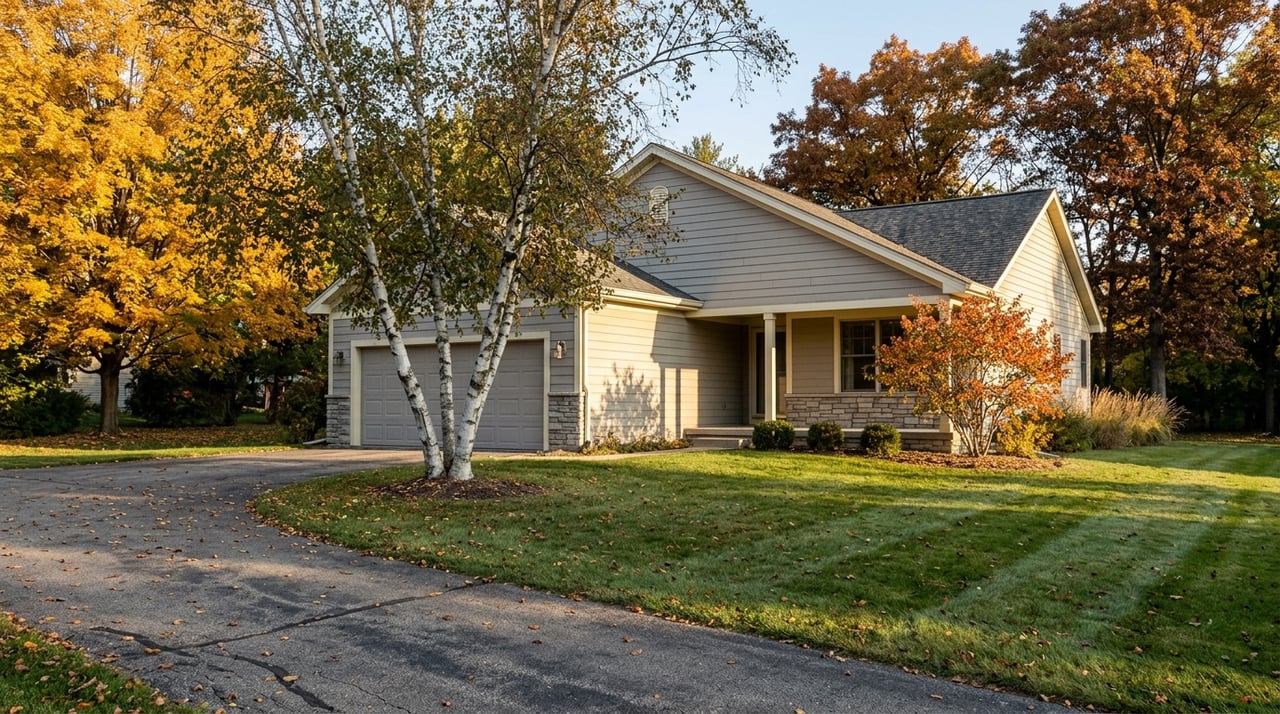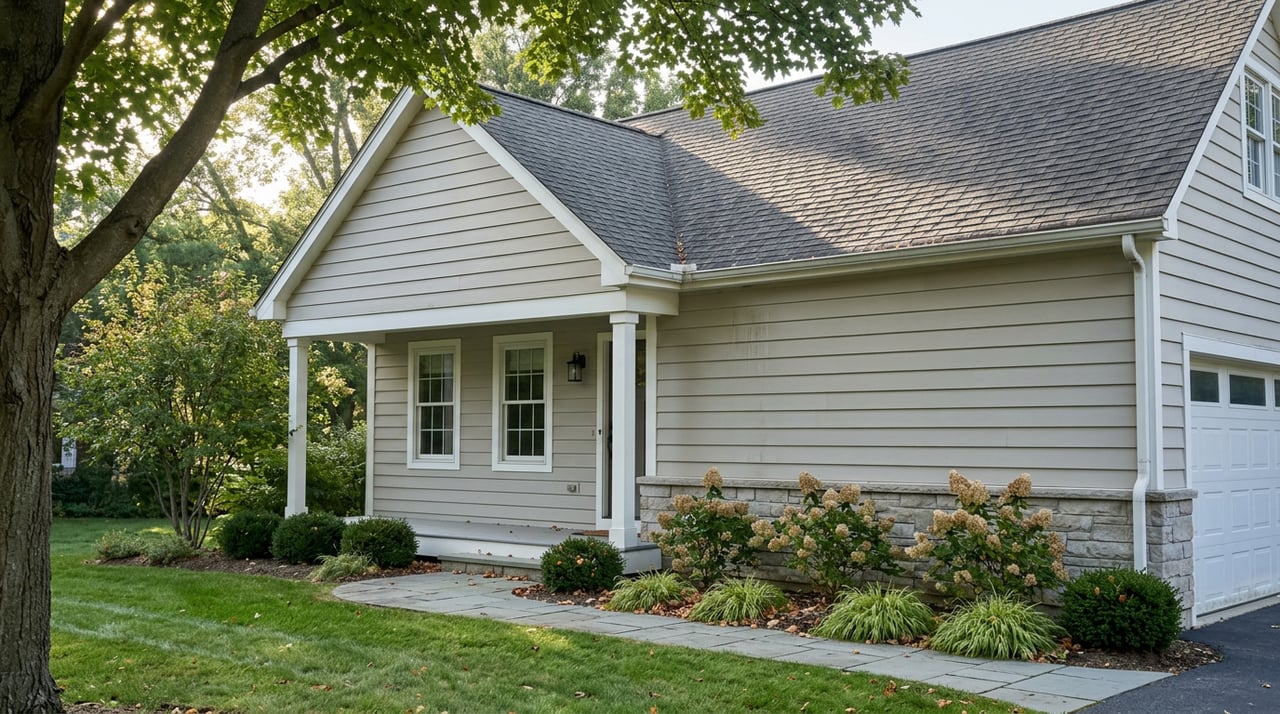
Are you getting ready to list your Clifton Park home and wondering how to choose the right price? You are not alone. In a market that still moves fast in popular price bands, the number you choose on day one can shape everything that follows. In this guide, you will get a clear, Clifton Park–specific way to think about pricing, so you can launch with confidence and protect your net proceeds. Let’s dive in.
Why pricing matters in Clifton Park now
Clifton Park sellers see a range of numbers across popular market sites, which can be confusing. Recent snapshots show different medians because each provider measures something slightly different and covers different areas or timeframes. For example, one major portal’s Clifton Park page has shown a recent median sale price near $400,000 as of February 2026, while a countywide valuation index placed Saratoga County’s typical home value near $443,229 for a similar date. Another listing-focused site has reported county days on market in the high 40s for a recent month. Meanwhile, the Capital District Regional Planning Commission’s 2025 housing report lists Clifton Park’s 2024 single-family median in the mid-$400Ks, which is a verified municipal figure you can use for historical context. You can review those town-level historical metrics in the CDRPC report for added perspective on trends over time (CDRPC 2025 Housing Report).
The takeaway is simple. Different data sources use different samples and definitions. That is why you need a pricing strategy that zooms in on your home’s exact competitive set rather than relying on one headline number.
Use a CMA to set your price band
A Comparative Market Analysis, or CMA, is the core document that supports your list price. It is an agent-prepared estimate of likely market value drawn from recent closed sales, current competition, and pending deals. The Pricing Strategy Advisor certification provides training for agents on how to build and explain a defensible CMA (What is PSA).
Here is how a strong CMA comes together:
- Define your competitive set. Choose sales from the most recent 3 to 6 months in your immediate area with similar bed/bath count, size, age, and lot. If activity is slow, expand to 12 months.
- Use three data lanes. Closed sales set a price band, actives show the options buyers see today, and pendings reveal where buyers are committing right now. NAR covers how modern CMA tools organize these inputs (NAR on AI CMA tools).
- Reconcile to a range. After adjusting for differences, your agent should present a low, likely, and high estimate with a short narrative that explains the recommended list price inside that range.
Make thoughtful adjustments for features
No two homes are identical. A credible CMA explains how your home’s features compare to each comp. Appraisers and PSA-trained agents use a few practical methods:
- Paired-sales analysis. Find two near-identical sales where the only difference is the feature, then use the price difference as a market-based adjustment (Appraisal Today on paired sales).
- Price per square foot. Apply a local price-per-square-foot derived from very close comps. Use this with care when layouts differ.
- Cost approach for rare items. If your home has a unique improvement, estimate replacement cost minus depreciation as a fallback when sales are thin.
- Market preferences. Document what buyers have actually paid for features like updated kitchens or finished basements by showing recent nearby sales. PSA training emphasizes documenting the logic behind each adjustment (PSA overview).
The goal is not to guess. It is to show your math so the final range makes sense to you and to the appraiser who may review your contract later.
Measure demand with months of supply
Months of supply, or MOS, is a simple way to measure how competitive your slice of the Clifton Park market is. Here is the math:
- MOS = active listings divided by average monthly closed sales.
- As a rule of thumb: less than about 3 months signals a seller-leaning market, 3 to 6 months is balanced, and more than 6 months leans toward buyers. Education materials recommend using a rolling average to smooth volatility (Absorption and MOS basics).
Why this matters for you: buyer activity and inventory can vary by price tier. Entry-level homes might have very tight supply, while upper tiers see slower turnover. Always compute MOS in the price band where you will compete, not the entire town.
Clifton Park example: show the MOS math
Here is a simple, local-style illustration using a recent-type snapshot. If you checked a portal’s Clifton Park page on the same day and saw 51 active listings, and your MLS showed an average of 20 homes closing per month, then MOS would be about 2.6 months. The math is 51 divided by 20, which equals about 2.55. That points to a seller-leaning environment in that band.
If another credible dashboard showed 78 actives with the same monthly sales pace, MOS would be about 3.9 months. The read of the market changes based on the source and the exact segment. This is why it helps to label any MOS figure with source and date and to focus the math on the price tier where your home will compete.
Price strategy affects days on market and net
Industry reporting has documented more price reductions as inventory rose in recent cycles. Listings that start too high often sit longer and then need cuts, which can reduce leverage and final sale price. Recent coverage summarizing portal data found a five-year high in inventory and record price cuts in many areas (Inventory and price cuts trend). That national view aligns with what many Clifton Park sellers feel on the ground. When you launch at a fair price for your buyer pool, you tend to get early showings and offers that track closer to ask.
Net proceeds: two short scenarios
Your bottom line depends not only on the final sale price but also on selling costs. To illustrate the impact of pricing outcomes, here are transparent assumptions you can adjust with your agent:
- Commission and related listing costs: about 5.5% of the sale price, based on recent industry surveys (Commission averages).
- New York state transfer tax: roughly 0.4% (TP-584) (NY transfer tax basics).
- Other seller closing fees: about 1.5% for attorney, title, and recording. These vary.
Illustrative outcomes:
- Priced right and sold quickly: final sale price $475,000. Total costs at 7.4% equal $35,150. Estimated net before mortgage payoff is $439,850.
- Overpriced, sits, then reduces: final sale price $457,000 (about 3.8% lower). Costs at 7.4% equal $33,818. Estimated net before payoff is $423,182.
That is a net difference of about $16,668 before you factor extra months of mortgage interest, utilities, taxes, and maintenance. Your agent can build a custom worksheet so you can plug in your actual payoff and local fees.
Your day 1 to day 14 plan
Momentum in the first two weeks matters. A clear pricing plan includes a quick review window and agreed triggers for action:
- Launch with complete, professional marketing. Pro photography and clear descriptions help you compete in the first 72 hours when buyers set their shortlists.
- Track signals daily. Watch showings per week, online views, and how your listing compares with similar homes that go pending during your first 10 to 14 days.
- Time-box your first review. If activity misses targets by your agreed check-in date, adjust quickly. A timely, data-based price update can reset visibility and avoid the drag of a stale listing.
Three numbers to ask your agent
When you meet with your agent, ask for these neighborhood-level metrics so you can price with confidence:
- The 12-month median sale price for your immediate area from MLS.
- The count of active listings in your target price band.
- The average monthly closed sales in that same band so you can compute months of supply together.
These three numbers, labeled with source and date, will tell you how much leverage sellers in your band have right now.
How a PSA-trained advisor helps
A Pricing Strategy Advisor brings structure and documentation to pricing conversations. Here is how that helps when you are weeks from listing in Clifton Park:
- A documented CMA with a clear price band. You will see the comps, the adjustments, and a narrative that ties it together (About PSA).
- MOS and absorption rate in your exact price tier. You will understand the demand you face, not just townwide averages.
- A day-1 marketing plan with an early check-in. You and your agent set metrics and a timeline upfront so decisions stay objective.
- Access to modern CMA tools. NAR highlights tools that pull together sales, actives, and pendings in a clear format you can review side by side (NAR on CMA tools).
Should you get a pre-listing inspection or appraisal?
Most Clifton Park sellers can price and launch confidently with a well-documented CMA and a short list of targeted repairs. A pre-listing appraisal or inspection can be helpful in unique or complex situations, especially if the home has rare features or if you want to reduce late-stage surprises. An inspection can increase buyer confidence and reduce renegotiation risk in some markets (Pre-sale inspection overview). If you are considering these steps, discuss the tradeoffs with your agent so the cost and timing align with your strategy.
Quick prep checklist before you list
- Pull 12-month closed sales in your immediate area and the active listings in your price band to build the CMA. RPR and similar tools make this efficient (How agents build CMAs).
- Calculate months of supply in your price band and review what that implies for leverage (MOS guide).
- Walk the house and note condition items. Decide which small repairs or staging moves pay off for local buyers. PSA training encourages documenting these decisions (PSA overview).
- Set your initial list price and your Day-10 review trigger with clear activity targets.
Your next step
If you want to price your Clifton Park home with clarity and calm, start with a personalized CMA and a simple, transparent plan. You will see the comps, the absorption math, and a custom net-proceeds worksheet that reflects your payoff and fees. Then you can choose a price and timeline that fit your goals.
Ready to move forward? Reach out to schedule your free home valuation and strategy call with Julie Ann Gold. You will get boutique, advocacy-first guidance backed by local expertise and professional marketing.
FAQs
What does months of supply mean for Clifton Park sellers?
- Months of supply is active listings divided by average monthly sales. Less than about 3 months often favors sellers, 3 to 6 is balanced, and more than 6 favors buyers. Always compute it in your price band, not the whole town.
Why do Redfin, Zillow, and Realtor.com show different prices?
- Each provider uses different data and definitions. Some focus on closed sales, others on listed prices, and some show county-level valuation indexes. Always label stats with source and date, and lean on a CMA that targets your exact competitive set.
Should I price above my agent’s recommended range to leave room to negotiate?
- Often that backfires. Overpricing can reduce showings, increase days on market, and lead to price cuts that lower your final net. A small premium is only wise when you have documented, rare value.
How soon should I adjust if showings are slow?
- Set a Day-7 to Day-14 review when you list. If showings and online views miss agreed targets, adjust quickly so you protect momentum.
Will a pre-listing appraisal set my final sale price?
- No. It is an independent opinion of value. Buyers and their lenders may order their own appraisals. Appraisals can help with unique homes, but most sellers can rely on a strong CMA and market feedback.